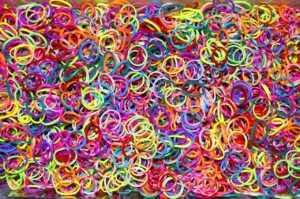
The Difference Between Standard and Fluorescent Rubber Bands
A rubber band may seem like a simple object, but the world of elastic fasteners is surprisingly diverse. Beyond the vast range of sizes and strengths, one of the most striking and useful variations is in the realm of color. When choosing a colored rubber band, you will often encounter two main categories: standard and fluorescent. While they may both be colored, the difference between a standard red band and a “hot pink” fluorescent band is not just a matter of shade; it is a fundamental product difference based on a fascinating scientific principle. Understanding the “fluorescent vs standard” distinction is key to choosing the right tool for your application, especially when visibility, branding, or organizational systems are a top priority.
At RuBands, we are experts in color technology and offer a full spectrum of both standard and fluorescent options among our many types of rubber bands. This guide will explore the science behind these two types of color, their unique properties, and the ideal applications for each, helping you to make a more informed and strategic choice.
The Science of Color: Reflection vs. Emission
To understand the difference, we first need to understand how we perceive color.
How We See Standard Color: The Principle of Reflection
When white light (which contains the full spectrum of colors) hits an object with a standard pigment, like a standard blue rubber band, the pigment absorbs most of the light wavelengths. It reflects only the blue wavelengths back to our eyes. We see the color that is reflected. The energy from the absorbed light is simply converted into a tiny, imperceptible amount of heat. A standard colored rubber band is, in essence, a passive reflector of light.
How We See Fluorescent Color: The Magic of Emission
A fluorescent rubber band does something much more active and dynamic. The special fluorescent pigments in the band have a unique molecular structure that allows them to perform a two-step process:
- Absorption of High-Energy Light: Like a standard pigment, they absorb light. However, they are exceptionally good at absorbing light from the high-energy end of the spectrum, which includes not just visible blue and violet light, but also, critically, the *invisible* ultraviolet (UV) light that is abundant in daylight and also present in most indoor lighting.
- Emission of Visible Light: This is the key product difference. After absorbing a photon of this high-energy light, the pigment’s molecules become “excited.” They cannot hold this extra energy for long, so they almost instantly release it by emitting a *new* photon of light. Due to some minor energy loss in this process, the emitted photon has a longer, lower-energy wavelength than the one that was absorbed.
In simple terms, a fluorescent pigment is converting invisible UV light into extra visible light. This is why a fluorescent color appears to “glow” or “pop” with an intensity that standard colors cannot match. It is literally emitting more visible light than the objects around it. A fluorescent band is an active light source, not just a passive reflector.
The Practical Differences and Best Applications
This scientific difference leads to a number of practical differences that make each type of band suitable for different tasks.
Standard Colored Rubber Bands
Key Characteristics:
- A wide range of beautiful, saturated colors.
- Excellent for general-purpose color-coding and organization.
- The color is stable and has good lightfastness (resistance to fading).
Best Applications:
- General Office Organization: They are perfect for creating standard color-coding systems for files and projects (e.g., red for urgent, green for financial).
– Crafts and Hobbies: The wide variety of available colors makes them a staple for all kinds of crafts for all ages where a specific, non-glowing shade is desired.
– Subtle Branding: For a brand that wants to use color in a more classic and understated way, a standard colored band that matches their brand palette is a professional choice.
Fluorescent Rubber Bands
Key Characteristics:
- An intense, super-bright, almost luminous appearance.
- Exceptional visibility, especially in daylight or under UV/blacklight.
- The available color palette is typically limited to the classic “neon” colors (hot pink, electric green, blazing orange, etc.).
Best Applications:
- High-Visibility Organizational Systems: This is their superpower. In a busy warehouse or mailroom where at-a-glance identification is critical for speed and accuracy, fluorescent bands are the superior choice. A fluorescent red band is simply impossible to miss.
– Marketing and Product Presentation: As we’ve detailed in other posts, fluorescent bands are a powerful marketing tool. When used to bundle fresh produce or to create a promotional package, their intense color acts as a magnet for the consumer’s eye, increasing product visibility on a crowded retail shelf.
– Safety Applications: In an industrial setting, a fluorescent band used to secure a coiled cable or a tool makes it highly visible, which can help to prevent tripping hazards.
– Party Decorations and Festive Crafts: The glowing, energetic nature of fluorescent colors makes them perfect for creating fun and vibrant party decorations and crafts that truly pop.
Conclusion: The Right Color for the Right Job
The choice between fluorescent vs standard rubber bands is a strategic one, based on the specific needs of your application. While both are excellent types of rubber bands, they serve different purposes. Standard colored bands offer a wider palette and a more classic look, perfect for general organization and subtle branding. Fluorescent bands, on the other hand, are a specialized tool designed for maximum visual impact, making them the superior choice for any application where high visibility, safety, or grabbing attention is the primary goal. By understanding this fundamental product difference, you can make a more effective and purposeful choice, ensuring that the color of your rubber band is not just a decorative feature, but a functional one.